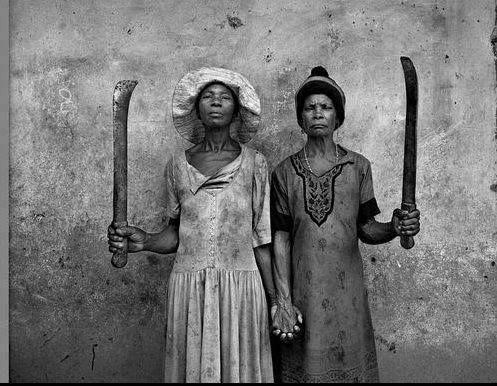
Slavery and slave trade are two of the most brutal violations of human rights in the history of mankind. To honor and remember the victims of slavery, the United Nations General Assembly Resolution 62/122 has designated the 25th of March as the annual International Day of Remembrance of the Victims of Slavery and the Transatlantic Slave Trade. This is a day to reflect on the slavery tragedies including the translantic slave trade, examining its causes, the long-lasting consequences it left behind, and the crucial lessons. We must learn to combat the evils of racism and prejudice that continue to happen as a result of the slavery events that have occurred.
PILS Associates
International Day for the Prevention of Violent Extremism as and when Conducive to Terrorism

30
Sep
Sep
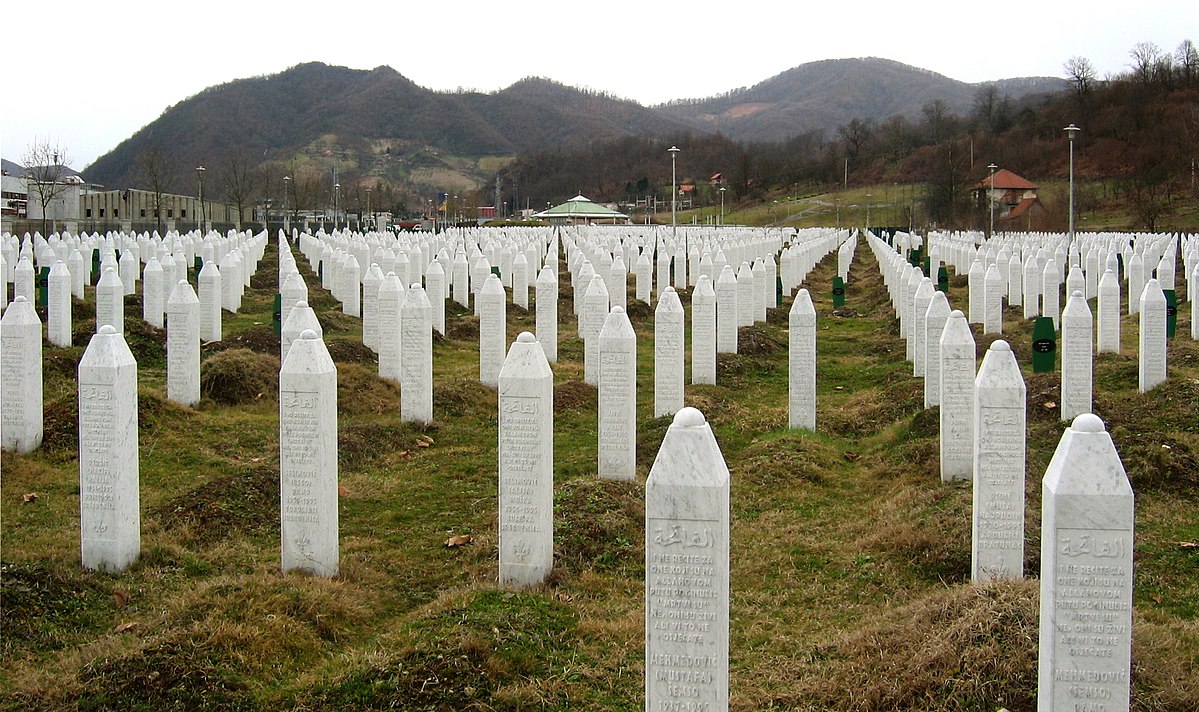
Genocide is the deliberate killing of a number of people with the aim of destroying their entire nation or group. Acts of genocide are laid out in Article 2 of the 1948 Convention on the Prevention and Punishment of the Crime of Genocide (Genocide Convention) which includes killing, causing bodily or mental harm, inflicting conditions on a group’s physical destruction, preventing births within a group, and forceful transfer of children to another group. It is, as we know, the worst kind of crime against humanity there is. It is a duty owed to every State to prevent and avoid the act of genocide, known as an erga omnes obligation. However, such a tragic and one of the worst genocide committed in the European continent happened in 1995, that is the Massacre in Srebrenica, Bosnia. The occurrence transpired due to the invasive maneuvers of Serbian forces to eradicate Bosnian Muslims. Until now, the visible and emotional aftermath of the battlefield remains evident upon the loss of tens of thousands of Bosnian Muslims. During that time, the international community was urged to address this matter within an international tribunal – striving for a positive resolution and bestowing justice among its victims.
28
Sep
Sep
Genocide is the deliberate killing of a number of people with the aim of destroying their entire nation or group. Acts of genocide are laid out in Article 2 of the 1948 Convention on the Prevention and Punishment of the Crime of Genocide (Genocide Convention) which includes killing, causing bodily or mental harm, inflicting conditions on a group’s physical destruction, preventing births within a group, and forceful transfer of children to another group. It is, as we know, the worst kind of crime against humanity there is. It is a duty owed to every State to prevent and avoid the act of genocide, known as an erga omnes obligation. However, such a tragic and one of the worst genocide committed in the European continent happened in 1995, that is the Massacre in Srebrenica, Bosnia. The occurrence transpired due to the invasive maneuvers of Serbian forces to eradicate Bosnian Muslims. Until now, the visible and emotional aftermath of the battlefield remains evident upon the loss of tens of thousands of Bosnian Muslims. During that time, the international community was urged to address this matter within an international tribunal – striving for a positive resolution and bestowing justice among its victims.
PILS Review
THE TERROR SUFFERED BY ROHINGYA: BACKGROUND AND ANALYSIS ON INDONESIA’S OBLIGATION TO ACCEPT ROHINGYA REFUGEES

30
Apr
Apr
The Rohingya stands as the biggest stateless population in the world. They have faced a long history of persecution and discrimination, which has resulted in statelessness and forced migration. Although international law has progressed to accommodate universal human rights, the Rohingya have been denied citizenship and fundamental rights, forcing many to flee their homes and seek refuge in other Southeast Asian countries. This legal review serves as a reminder that improper implementation of international law and the lack of commitment to peace results in chaos, and the deprivation of human rights. Currently, the International Court of Justice (ICJ) has rejected all 4 Myanmar’s preliminary objections to the case brought by Gambia regarding Myanmar’s alleged genocide against the ethnic Rohingya population in Rakhine State. This is a step forward in protecting the lives and human rights of the Rohingya. However, many Rohingya refugees still face uncertainty regarding their status and have suffered rejection by local communities in Indonesia.

15
Dec
Dec
Espionage is an ancient art whose genesis leads further back to biblical times. Scriptures of the Old Testament depict a story of The 12 Spies, a narrative of espionage administered by Moses under God’s instruction. Since then, the utilisation of espionage has further progressed through the Middle Ages and even in Tudor times. It was only during modern warfare that the orchestration of espionage by warring states had escalated. Governments recognised the value of espionage as a powerful instrument for them to wield during such a time, with the means to collect information that was highly confidential, nevertheless a valuable asset to possess against another State in the event of war. This facet is emphasised during World War II, where espionage had become the bedrock of a government’s duty in ensuring its country’s survival and triumph, accounting espionage as a “vital necessity in the national security process”.

24
Nov
Nov
A new environment, new colleagues, and a new field of knowledge. What was it like for a first-year law student? From the moment I heard about PILS, getting accepted as an intern, going through the internship, and ultimately, participating in the internal moot, was one exhilarating and unforgettable experience a first-year can never forget.

22
Jun
Jun
The history of a nation may frequently be undervalued, yet it plays an important role in forming the central core of a state’s self-identity. Specifically, historic rights of area are closely connected to the acquisition of territory in international law. Commonly, this particular type of claim will raise a question of which state discovered the area prior to any other states.

24
May
May
For the first time since its designation in 2009, Mother Earth Day is being recalled within the UN Decade, focusing on the topic of Ecosystem Restoration in support of all life on earth. This Ecosystem Restoration is in line with the Sustainable Development Goals (SDGs) in 2030, which aim for international cooperation in identifying the key challenges to sustainability worldwide. This is Mother Earth’s call for action – urgent and necessary to hold ourselves accountable for nature’s dangerous decline, which has only worsened since the industrial revolution.
Keeping Up with PILS
Unpar Vis Team emerged as the Semi-finalist of the 20th Willem C. Vis East International Commercial Arbitration Moot

16
May
May
We are extremely delighted to announce that UNPAR Vis Team has emerged as the semi-finalist of the 20th Willem C. Vis East International Commercial Arbitration Moot, surpassing every previous record of Indonesian universities in past years. Additionally, the team also managed to bring home Honorable Mention for the Best Claimant Memorandum (David Hunter Award), while our oralists, Shaunelee Alcinia Yanni, won the 1st Runner-up for the Best Oralist Award, and, Lovelyn Tayuwijaya, bagged the Honourable Mention for the Best Oralist Award. Out of 111 participating teams, the team had the privilege of having Professor Ulrich G. Schroeter presided over the semifinals rounds. To reach this stage, the team had to face various prestigious universities, such as the National University of Singapore, University of Vienna, Göttingen University.
22
Apr
Apr
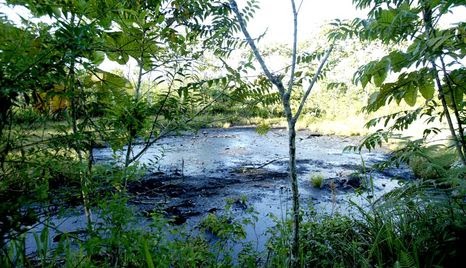
For the first time since its designation in 2009, Mother Earth Day is being recalled within the UN Decade, focusing on the topic of Ecosystem Restoration in support of all life on earth. This Ecosystem Restoration is in line with the Sustainable Development Goals (SDGs) in 2030, which aim for international cooperation in identifying the key challenges to sustainability worldwide. This is Mother Earth’s call for action – urgent and necessary to hold ourselves accountable for nature’s dangerous decline, which has only worsened since the industrial revolution.