
Previous
Next

PILS Universitas Katolik Parahyangan

Parahyangan International Law Society (“PILS”) has been considered a home for our members since 2005. Our organization aspires to facilitate students in international moot court competitions. We seek to develop our members to achieve their professional skills in research, writing, oral advocacy, and global networking.

A cordial welcome to the official website of Parahyangan International Law Society (PILS)! 
 
This year marks the 20th anniversary of PILS’ establishment. Since 2005, PILS has proudly served as a home to generations of mooters competing in the world’s most prestigious international moot court competitions. Professionalism, integrity, and competence—these values remain deeply embedded throughout every step of our journey, reflected in the 50+ international level accolades we have proudly received. 
 
In every competition, our members hone their legal research and drafting in crafting a legal memorandum, while also refining their precision, and eloquence through oral pleadings. These fortes form a vital foundation, enriching our members’ experiences as they pave their respective paths toward future legal careers—just as our distinguished alumni have done before us. 
 
Beyond mooting, we are equally proud to facilitate UNPAR law students who are passionate in producing legal writing products through PILS Associates. PILS Associates stands as a platform to explore diverse fields of international law, and convey them in the form of articles, reviews, as well as academic journals. PILS Associates has published a great line of writing products, such as those discussing issues of maritime law, human rights, environmental law, and more!
 
Serving as the President of PILS for the 2025/2026 administrative term, I embrace the year ahead with great anticipation—one that promises new competitions, fresh achievements, and continued excellence rooted in the legacy of our past mooting seasons. 
 
I warmly invite you to embark on your own mooting journey with PILS, authoring writing products with PILS Associates, and take part in shaping a legacy of excellence as aspiring legal advocates.

Vionna Angeline Chandra

PILS PRESIDENT

1 Years
Established
1 + Awards
won

News & events

PILS Associates

Invisible Wounds: The Enduring Impact of Enforced Disappearance

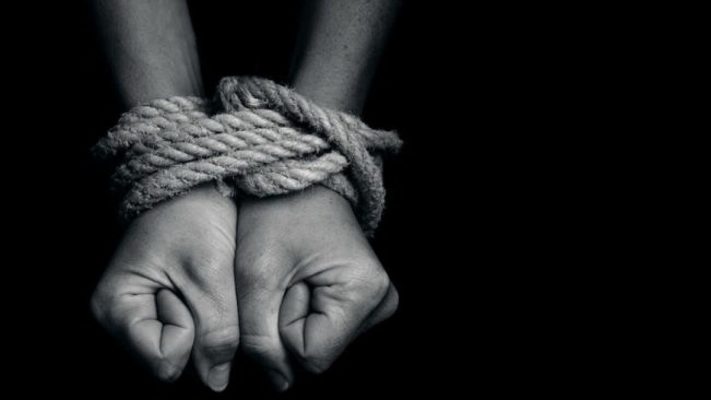
The act of enforced disappearance represents one of the gravest human rights violations recognised under international law. On 21 December 2010, through Resolution 65/209, the United Nations (“UN”) General Assembly expressed deep concern over the increasing number of enforced disappearances worldwide. This violation is defined as any act of arrest, detention, or abduction that is followed by refusal to acknowledge the person’s fate or a concealment of their whereabouts. For this reason, the UN established the International Day of the Victims of Enforced Disappearance, commemorated annually on August 30th, as an official occasion to confront and raise global awareness of this human rights violation. The very institutions charged with safeguarding citizens become the perpetrator of their persecution. It is in response to this profound injustice that the international day was created. This day serves not as a celebration, but as a moment of remembrance and solidarity, honouring those who have been forcibly taken from their families, often by state authorities or with state approval, and whose fate remains deliberately concealed.
Read More »
PILS Associates

Legal Commitments, Political Failures: Rethinking the Enforcement of Anti-Trafficking Laws

By compelling or coercing a person to provide labor or services, or to even engage in commercial sex acts, human trafficking is thereby viewed as a violation of human rights. Every year, countless children, men, and women worldwide fall victim to the crime of human trafficking. Vulnerable individuals – particularly children, migrants, and those living in poverty – are often prey to traffickers as these groups typically lack sufficient legal protection and access to support systems, hence making them easier to exploit. Forced labour, sex slavery and organ trafficking. On that score, traffickers would isolate and limit their victims’ freedom in order to maintain control over them and to prevent their escape. Furthermore, victims are often stripped of their identification, thus cutting off all traces of the victim, which eventually makes it difficult to identify the victims of human trafficking. Human trafficking is not merely a domestic matter, as it has long been recognised as an issue to the international community, with its genesis marked by the creation of the 1904 International Agreement for the Suppression of the White Slave Traffic, a convention addressing slavery and human trafficking, while shedding light into the illegal trade of white people.  Individuals from selected  regions  are targeted and transported by traffickers across multiple jurisdictions. Due to its nature as a cross-border or transnational crime,  human trafficking thereby necessitates coordinated international responses. In this vein, addressing the crime of human trafficking requires robust cooperation between states, harmonised legal standards, effective information-sharing mechanisms and consistent legal enforcement. In order to create shared obligations for the prevention, protection and punishment of human trafficking, transnational legal instruments, such as the Palermo Protocol, are vital. Nevertheless, it would be easier said than done, as effectively putting these ideas into practice remains a significant challenge for numerous states across the world.

Read More »
PILS Associates

A Blunt Tool of Justice: The ICC’s Ongoing Challenges in Enforcing Accountability

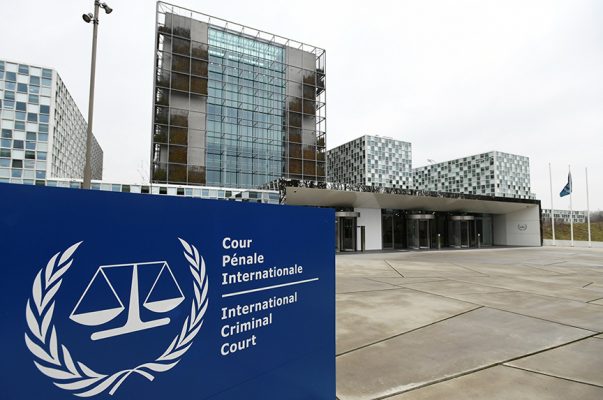
The International Criminal Court (“ICC”) is a beacon of justice in a world that is becoming increasingly plagued by international conflicts. The ICC as an independent international organization is established under the Rome Statute, exercising the mandate to prosecute and hold accountable perpetrators of the most serious crimes to the international community, even amid the escalation of armed conflicts and humanitarian crises worldwide. On the other hand, the complexity of its own laws makes it harder for it to hold people accountable. Resultantly, the international community continues to grapple complex legal challenges, including those arising from significant constraints rooted in the ICC’s legal foundation. Notably, Article 87, 89, and 98 of the Rome Statute make it very hard for the ICC to arrest suspects and bring them to trial. This raises concerns about the Court’s capacity to deliver justice and prevent impunity. 

To address international crimes, the ICC is authorised to issue arrest warrants for individuals suspected of committing crimes listed in Article 5 of the Rome Statute. These warrants are the primary instrument through which the Court exercises its judicial authority. Once a warrant is issued, they initiate further steps such as investigations and prosecutions, with general principles of criminal law applied throughout the trial process. A key example of the ICC’s use of arrest warrants occurred in March 2023, when it issued for Vladimirovich Putin and Maria Alekseyevna Lvova-Belova, over war crimes related to the illegal deportation of Ukrainian children. Similarly, In November 2024 Israeli Prime Minister Benjamin Netanyahu and former Defense Minister Yoav Gallant faced allegations of war crimes and crimes against humanity for employing starvation as a method of warfare by restricting humanitarian aid to Gaza. These cases highlight the ICC’s efforts to transform legal authority into tangible accountability. Therefore, this article examines how Article 87, 89, and 98 of the Rome Statute create enforcement challenges that hinder the Court’s ability to fulfill its mandate and the urgent need for reform to strengthen the ICC’s ability to carry out its mandate.

Read More »
PILS Review

Beyond Borders, Beyond Rights: Cross-Border Surrogacy and the Conflict of Nationality Laws

The legality and ethical implications of cross-border surrogacy continues to be an issue of debate across different states and international forums. Surrogacy is a mechanism in which it establishes a contractual agreement between intended parents and a surrogate, where the surrogate carries the child on behalf of the intended parents. Legal complications often arise when the intended parents and surrogate originate from different jurisdictions, especially concerning the child’s nationality and the intended parent(s) legal parental status. This complexity is further intensified by the fact that personal law, which governs family matters based on nationality or domicile, exhibits considerable variation between jurisdictions. While some states recognise and enforce cross-border surrogacy practices, others prohibit or restrict such arrangements altogether, thereby creating a fragmented legal landscape. This article will examine the current jurisdictional challenges in cross-border surrogacy and propose specific legal mechanisms for implementing such a harmonised regulatory approach.

Read More »
Keeping Up with PILS

PILS Symposium 2024: As a Tribute to the 70th Birthday of Dr. Bayu Seto Hardjowahono, S.H., LL.M.

The primary aim of the PILS Symposium 2024 is to facilitate knowledge sharing and collaboration within a specific legal field. It allows participants to present new research findings, discuss and address challenges relevant to each field. Presenting at a symposium helps improve public speaking and presentation abilities, boosting confidence in sharing ideas with an audience. On December 20th, 2024, we were honoured to hold our very own Symposium as a tribute to the 70th birthday of Dr. Bayu Seto Hardjowahono, S.H., LL.M. PILS Members had the chance to present their articles that cover a few subjects. The first article titled “Choice of Court Agreement and the Principle of Actor Sequitur Forum Rei: a Conflict in International Civil Procedure” was presented by Ian Suseno and Audelynn Wong. The second article titled “Safeguarding Child Performers from Parental Economical Exploitation: A Comparative Legal Analysis of Indonesia and The USA” was presented by Shelika Novianda. The third and last article titled “Revisiting the Two-Way Interpretation of Fundamental Breach: an Analysis on the CISG” was presented by Beatrix Bunga, Rachael Karina and Carla Olympia.

Read More »
PILS Associates

Cosmos and Climate: the Exploration and Assessment of International Law’s Role within World Space Week 2024

October – a month popular for spooky celebrations of pagan and secular traditions. What is lesser known to people is that the month is equally dedicated to celebrate the realm that stretches beyond earth’s atmosphere; an annual observance of the yonder that lies outside the Kármán Line. In particular, space exploration is commemorated during World Space Week, in which the achievements and benefits it brings to humanity is recognised throughout the 4th – 10th of every October.

Read More »

Supported by

upscalemedia-transformed (3)
upscalemedia-transformed (2)